Miramichi River
Silent SpringThe Miramichi River in New Brunswick is portrayed as a salmon river whose ancient seasonal pattern was broken by pesticide spraying. Its story links the return of salmon to their native tributaries, the poisoning of stream life, and a recovery that remained conditional: the Northwest Miramichi retained relatively healthy runs because spraying occurred in only one year, while other streams in the watershed suffered alarming declines under repeated treatment.
A River Shaped by Salmon
In the summer and fall of 1953, salmon left their feeding grounds in the far Atlantic and ascended the Miramichi River, returning to the tributaries where they had spent their first months or years. The upper river’s streams gathered through shadowed brooks, with spawning grounds among balsam, hemlock, and pine. That network of suitable habitat had helped make the Miramichi one of North America’s finest salmon streams.
The salmon’s return was part of an age-old cycle: fish came back to their native river, laid eggs in shallow, gravel-filled streambeds, and sustained the next generation. The account makes the river more than a setting for a fishery. Its tributaries, spawning grounds, and stream life form a connected system on which the salmon depend.
Spraying and the Broken Cycle
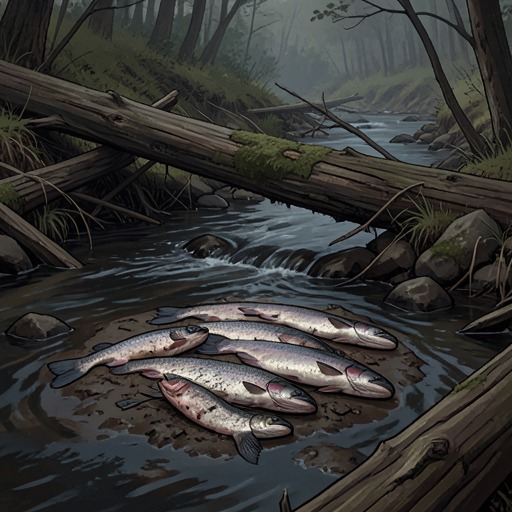
The established pattern was broken in 1953. Soon after the spraying ended, dead and dying fish—including young salmon—appeared along the banks. Brook trout were among the dead, and birds were dying along roads and in the woods. The damage extended beyond conspicuous fish kills: the stream’s aquatic life was stilled, including the organisms that supplied food for salmon and trout.
The account notes that spray crews did not try to avoid streams or shut off their nozzles while flying over them. It also cautions that drifting spray could have reached the water even if those precautions had been taken. The episode thus reveals how a chemical operation directed at one target could reach a wider landscape, with the river and its food web exposed to the fallout.
Uneven Recovery and Lasting Risk
Some salmon completed their growth in the stream rapidly and went to sea early. Many returned in 1959 in large runs of grilse, offering evidence that the Northwest Miramichi could rebound after the single year of spraying. But that return did not make the damage inconsequential or establish that the river was secure.
The contrast within the watershed gives the recovery its limits. The Northwest Miramichi remained in relatively good condition because spraying took place in one year only; streams subjected to repeated spraying showed alarming declines in salmon populations. The river’s history therefore turns on recurrence as much as on the initial poisoning: a single disruption was followed by a notable return, while repeated chemical pressure threatened to erode the conditions that made the Miramichi a celebrated salmon river.